Urgent Garage Door Repair covers Leander daily. Springs, openers, cables and doors off their tracks, same day where we can.
Tell us what the door is doing. No charge to come out, and nothing to pay if you decide against it.
A door at the end of its life is the fault we're called out for most often in Georgetown, and it's the one homeowners least expect. Nothing wears visibly, nothing sounds wrong, and then one morning the door won't lift and the car is shut in. Around Leander and Sun City we see it concentrated in Sun City single-stories and newer Wolf Ranch builds, where hard sun and hail, and heavy use in Sun City's retirement homes.
A replacement isn't just a door. The opening is measured for headroom and backroom, the old door and track come out, new track is set plumb and square to the opening, the door is stacked panel by panel and the sections hinged, and then the counterbalance is sized to the finished weight and wound. Getting the last part wrong is why some new doors are hard on their openers from day one.
Georgetown, Round Rock, Leander, Liberty Hill, Jarrell and the rest of Williamson County are all inside the normal radius. The visit costs nothing, the written estimate costs nothing, and the price is fixed before a tool comes out.
Replace rather than repair when the panels are rotted, rusted through or dented across more than one section; when the door is single-skin and the garage is a usable room; or when the repairs have started arriving faster than once a year.
If any of that matches, a technician can diagnose it on site in about ten minutes. We don't guess at it down the phone, and we don't charge to look.
A steel door is a twenty-to-thirty-year object bolted to a set of five-to-ten-year ones. Springs, cables and rollers are consumables, and replacing them two or three times across a door's life is normal rather than a sign the door was a bad one. What ends a door is the panels.
Insulation is quoted as an R-value, and it's the number that decides whether the garage is usable in winter. A non-insulated door is roughly R-0 to R-2; a polystyrene-core door around R-6 to R-9; a polyurethane door R-12 to R-18. The polyurethane doors are also noticeably quieter and stiffer.
A new door is the right time to replace the opener if it's anywhere near its age, because the labor overlaps almost entirely. It's also the right time to move to nylon rollers, since the door is being built up from parts anyway.
People put this off, and it is worth being straight about where that goes. None of the following is unusual. It's the ordinary sequence, and we see it in Georgetown every week.
The visit and the written estimate are free, so finding out where you stand costs you nothing at all. That is the whole reason to call early rather than late.
Most garages in Georgetown are Sun City single-stories and newer Wolf Ranch builds. That single fact drives more of what goes wrong than the weather does, because it sets the door's weight, and the door's weight sets everything else. Spring size, cable gauge, how hard the opener works.
A double door in Georgetown runs 130 to 190 pounds, more if it's insulated. That weight is cancelled by the spring, carried by two cables, and steered by rollers in a steel channel. Take any one of those three out and the other two fail within days.
Around Leander and Wolf Ranch we see the consequences of that chain often enough to recognize them on the phone. A description of the noise usually tells us which of the three went first, and what else it has already damaged.
Which is the practical reason to call somebody who works this area rather than a dispatch number: the diagnosis starts before the van leaves.
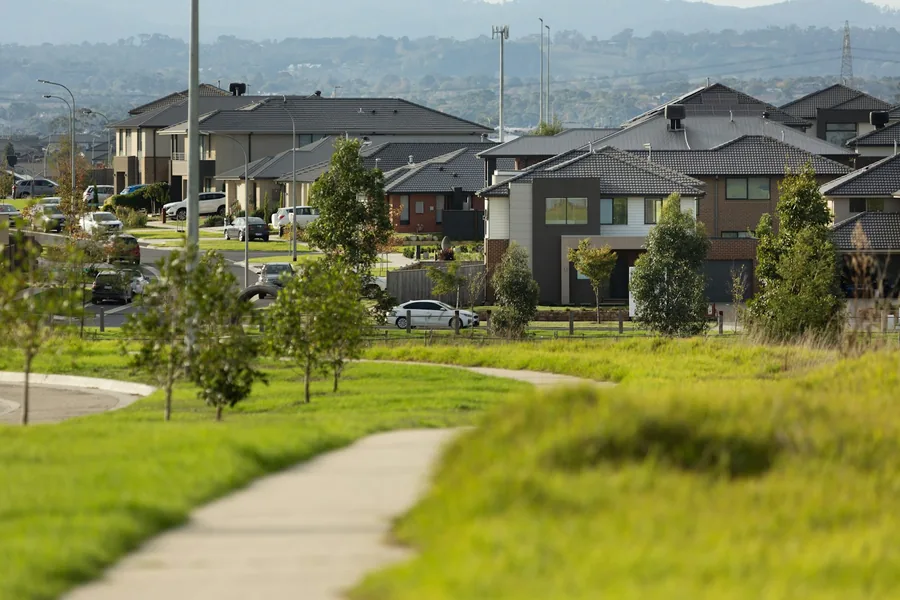
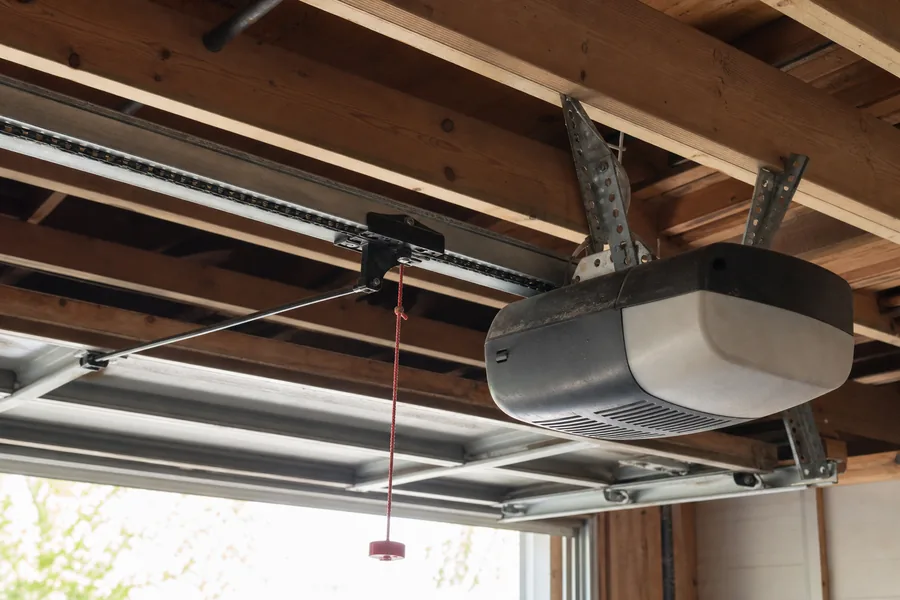
Hard sun and hail, and heavy use in Sun City's retirement homes. Split by component, the effect is not evenly distributed:
| Part | What the local climate does to it |
|---|---|
| Torsion spring | Surface corrosion removes section, stress concentrates there, and the spring fails short of its cycle rating. |
| Lift cables | Rust starts at the bottom bracket end, closest to the floor, and works up the lay of the wire. |
| Rollers | Grit and moisture together destroy unsealed bearings; sealed nylon rollers are largely immune. |
| Bottom seal | Hardens, cracks, and stops sealing - after which the weather is inside the garage rather than outside it. |
| Opener | Suffers indirectly. Every one of the above makes the door heavier to move, and the nylon drive gear is what pays for it. |
None of it is exotic and none of it needs a special product. It needs looking at twice a year, which is the part most people in Georgetown skip.
The measurement that catches people out is headroom. The distance from the top of the opening to the ceiling. Standard torsion needs about twelve inches. Low-headroom track exists for less, but it has to be specified at order time, not discovered on install day.
There's no safe way to keep using it, and there's no prize for trying. Load that should be on the counterbalance goes somewhere else instead. Hinges, brackets, the opener's gear. And each of those is a bigger job than the part that actually failed.
If the car has to come out, do it with the door fully down and the opener released. A partly-raised door with no working spring will finish the journey by itself.
The difference between a job finished today and a job finished on Thursday is almost always whether the right part was on the van when it arrived. So the van is loaded for what Georgetown actually breaks rather than for a national average.
Springs in the common sizes, lift cables, drums, rollers, hinges, brackets, opener gear kits, remotes, safety sensors and weather seal all travel with the technician. Panels and complete doors are ordered, and we tell you that at the estimate rather than on the day.
It's also why the description you give on the phone matters. Tell us what the door is doing, what it sounds like, whether it's a single or a double and roughly how old it's, and the van leaves already carrying the answer.
Almost every early failure we see in Georgetown traces to one of four things, and all four are within a homeowner's control.
An unbalanced door. If the spring isn't carrying the weight, the opener is, and the nylon gear inside it's the part designed to give way first. An opener that strains is an opener with months left.
Dry hardware. Hinges and rollers that have never been lubricated add drag to every cycle, and drag is spent cycle life. It's the difference between a spring reaching its rating and falling well short of it.
Ignored warnings. A frayed cable, a seized roller or a door that has started to sit crooked is a straightforward repair for a few weeks and a much larger one afterwards.
And forcing it. Every attempt to run a door that has already failed moves load onto parts that weren't designed to carry it.

Georgetown covers Leander and Sun City. Not a franchise territory drawn on a map somewhere else. The actual streets the van is on most days.
You get a two-hour arrival window rather than a day, and a call before the technician sets off. If we're going to be late you hear it from us first.
The visit is free, the written estimate is free, and nothing is agreed until you have seen it in writing. If you decide against it, that's the end of it.
Garage door mechanisms are far more alike than the badges suggest, and the parts that fail are common across brands. These are the ones we see most in Georgetown.
| Brand | Notes |
|---|---|
| LiftMaster / Chamberlain | The same units under two names. Gear kits, logic boards and Security+ 2.0 remotes are stocked, and the older 315MHz heads can still be paired. |
| Sommer / Marantec | Less common here, direct-drive heads, and the parts have to be ordered. So we confirm the model before the van is loaded. |
| Genie | Screw-drive and belt-drive heads. Intellicode remotes and carriage assemblies are the usual failure points, and both are parts rather than a reason to change the opener. |
| Wayne Dalton | The TorqueMaster counterbalance is a spring inside the tube rather than on it, and it needs its own tools and its own parts. We carry them. |
| Chamberlain myQ | Wi-Fi hubs and the app side fail more often than the mechanics do. Usually a re-pair rather than a replacement. |
| Craftsman | Built on Chamberlain internals for most of their production run, so the gear kits and boards are shared and readily available. |
If yours isn't there, it's almost certainly still standard torsion hardware. Read us the badge on the door or the model number off the opener when you call and we'll confirm before the van is loaded.
Yes, in writing, on parts and labor. If the same fault returns inside the warranty period we come back and put it right at no charge.
Yes. Card, and everything is documented in writing. Nothing is cash-only and nothing is agreed on the doorstep without it in writing.
A steel door is a twenty-to-thirty-year object bolted to a set of five-to-ten-year ones. Springs, cables and rollers are consumables, and replacing them two or three times across a door's life is normal rather than a sign the door was a bad one. What ends a door is the panels.
No. The visit and the written estimate are free anywhere in Williamson County. You pay only if you agree the price and we do the work.
Most new garage door installation jobs are finished within the same visit, typically under two hours.
Yes - LiftMaster, Chamberlain, Genie, Craftsman, Clopay, Amarr, Wayne Dalton and the rest. The mechanisms are common across brands and we carry parts for all of them.
There's no pressure attached to the call. Plenty of people ring to find out whether something is urgent, get told it isn't, and book for next week. That is a perfectly good outcome and it costs nothing.
If it's urgent. A door standing open, or a car shut in. Say so and it moves to the front of the list. Georgetown, Williamson County and the towns around it.