The garage is the biggest door on the house and usually the least thought about. Nine things that make a real difference, from the free ones to the ones we install.
Give us the problem. Free estimate, no catch.
Most houses in Georgetown put more thought into the front door lock than the garage, and the garage is the door that leads straight into the house, usually through an inside door nobody locks. A garage door has an opener that can be told to open, a release that can be reached, a keypad with a code, windows in a lot of older panels, and a side door with a builder's-grade knob. Each one is a small thing on its own. Together they're why the garage is where a lot of break-ins start.
None of what follows is exotic. It's the list we give people after a burglary on the block, and most of it takes an afternoon.
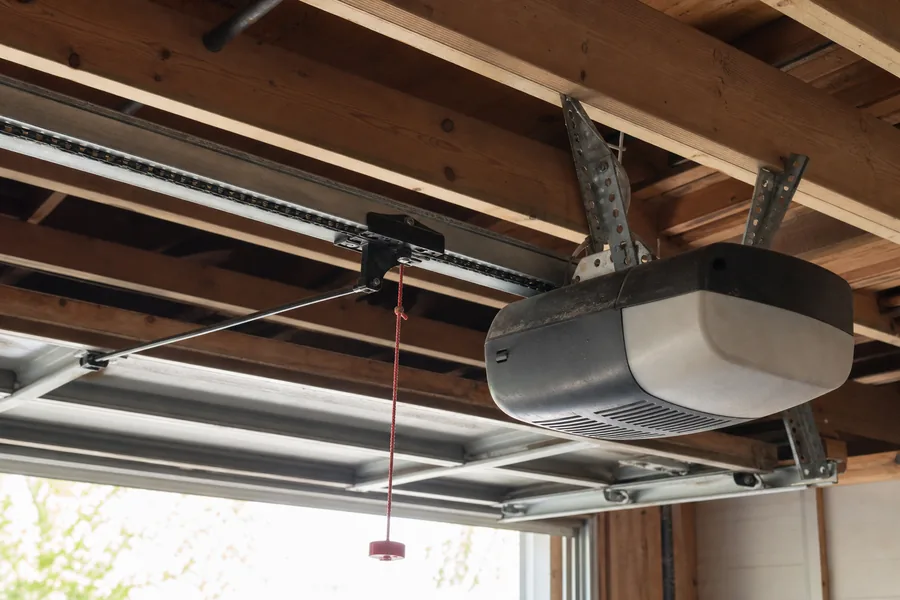
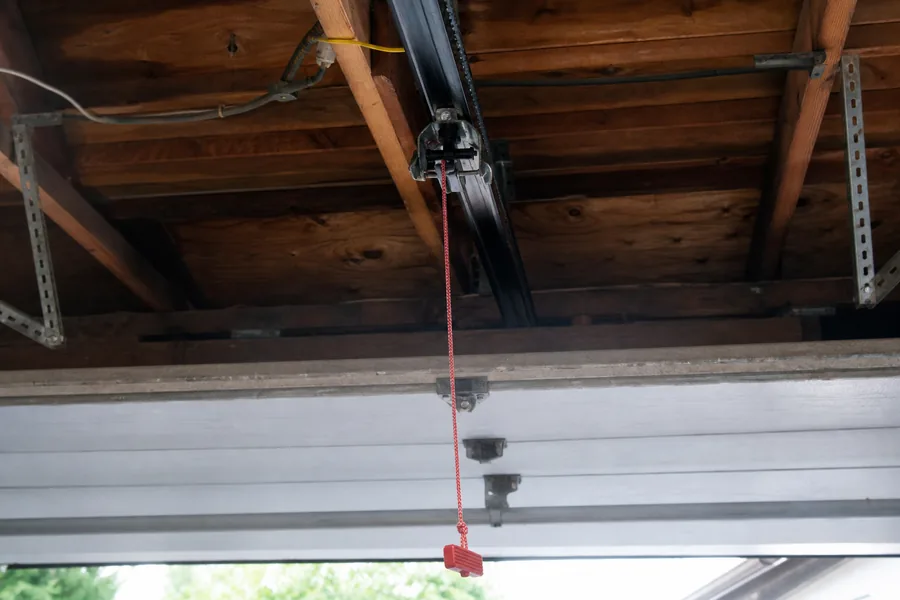
The red cord hanging from the opener trolley disconnects the door from the opener so it can be lifted by hand in a power cut. It has to stay reachable from inside; that's a safety requirement. What it doesn't have to be is reachable from outside, and on many doors the gap at the top of the door leaves it exposed.
The fix is a release shield: a small metal plate that fits over the trolley and blocks access to the release from above while leaving the cord free to pull from inside the garage. Ten minutes to install. We fit them on most of the doors we service, and they're the quickest improvement on this page in terms of effort.
Start at the top; the first four need no tools.
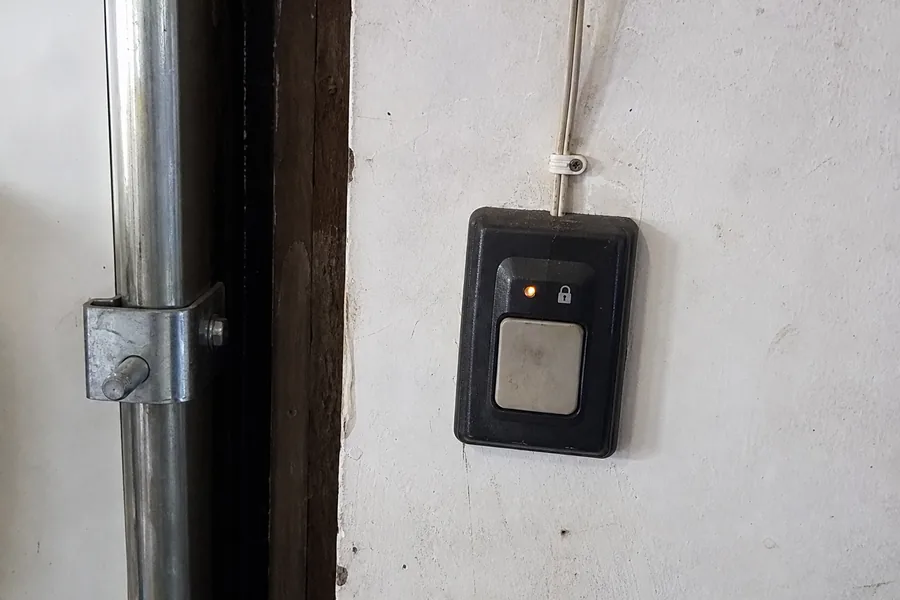
Openers built since the late 1990s use rolling code: every press of the remote sends a new code, so a recorded signal is useless afterwards. Openers older than that use a fixed code set by tiny switches inside the remote, and those can be read and copied. If your opener predates rolling code, the honest advice is to replace it; a current belt-drive unit brings rolling code, a lock mode, smart alerts and quieter running in one job.
You can tell by the learn button. A colored square button on a Chamberlain or LiftMaster, or a Genie marked Intellicode, is rolling code. A row of small switches inside the remote's battery cover is fixed code.
Engage the opener's lock mode. Slide the manual lock on the track. Take the remotes out of any car staying on the street. Lock the inside door. If the opener has an app, set an alert for any opening. Ask a neighbor to notice the door. It reads like a lot; it's five minutes, and it's the difference between a garage that's a way in and one that isn't.
When you're back, unlock the slide bolt before pressing the remote. An opener fighting a locked door strips its own gear.
We fit release shields, slide locks, deadbolts on the door into the house and the side door, replacement top sections without glass, and Wi-Fi openers or smart modules on existing openers. We replace fixed-code openers with rolling-code units. On a visit for anything else, we'll point out the things on this list that apply to your door if you ask.
What we don't do is describe on this site how a garage door is defeated. The protections above are enough to know; the methods aren't something we publish.
A closed garage door is a secured garage door. Not if the release is reachable, the remote is in the car and the inside door is unlocked. Closed and secured are different states.
Smart openers make it less secure. A current one with a strong account password is the opposite: you find out the moment the door opens, and you can shut it from a phone. The risk is a weak password reused from somewhere else.
The side door doesn't matter. It's the door most often used, because it's the one nobody hardened.
Yes. It blocks the release from outside and above only. From inside the garage the cord hangs and pulls as it always did.
If the remote has a row of small switches under the battery cover, it's fixed code and we'd recommend replacing the opener. If it has a learn button, it's rolling code and fine to keep.
Yes, on most sectional doors. It fits inside the track and takes about twenty minutes. Remember to unlock it before using the opener.
It looks like frosted glass from outside and lets light in. If you'd rather, a replacement top section with no windows matches the rest of the door.
Free, across Williamson County. You hear what we'd suggest and what it takes, and no is a complete answer.
Usually. Most of the items above are short jobs and the schedule keeps room for them.
One call, a two-hour window, and a call ahead from the technician. That's the routine across Georgetown, Downtown Square and Round Rock.
Free estimate. Throughout Williamson County, including Sun City, Downtown Square, Berry Creek, Round Rock, Leander, Liberty Hill, Jarrell.
We give a two-hour window rather than a day, and we call before setting off. Free throughout Williamson County. The estimate is free either way.
Prefer a voice? Call (512) 642-5436.
Give us the problem. Free estimate, no catch.